
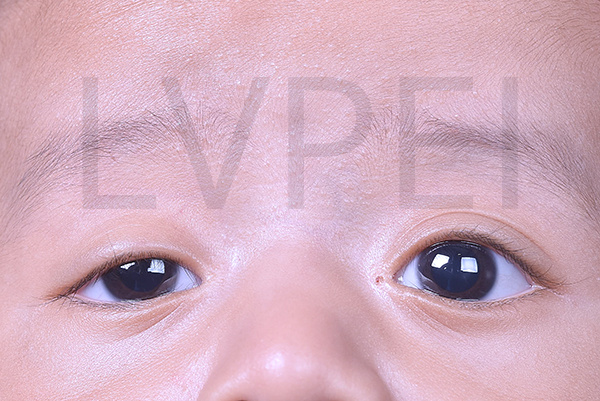
Sometimes, kids are born with droopy eyelids. It can involve only one eye or both the eyes. In medical terms, it is referred to as ‘blepharoptosis’ or simply ‘ptosis’.
What does this mean?
It means that when the child is in the mothers womb and is developing, sometimes the eyelid muscle does not develop completely and is faulty. Hence, the eyelid does not lift completely and that eye appears small.
What to do next?
- First thing is to visit your eye doctor. The child needs to be examined.
- Vision can be assessed as early as 6 months of age using charts, although may not be as reliable but will definitely give us a clue. The assessment then continues periodically.
- When the eyelid is covering the cornea (black part of the eye) significantly, there is a chance that it is hampering the vision development in the child. Treatment is then needed for these children.
- If the eyelid is drooping only mildly, we can safely observe the child.
Treatment options:
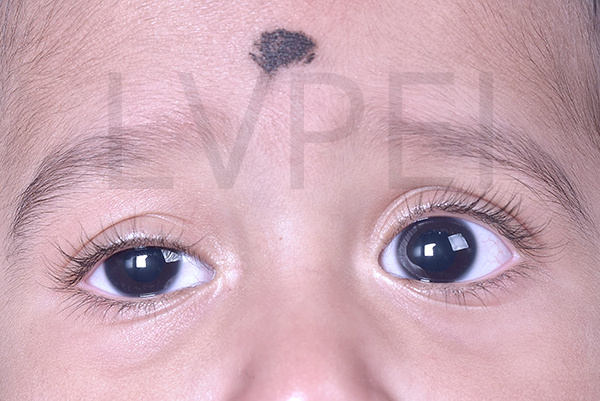
If the eyelid droop is mild, we can safely observe till child becomes cosmetically aware of the problem or till the child grows old enough to handle the surgical stress. There is no age limit. So there is no need to rush for the surgery.
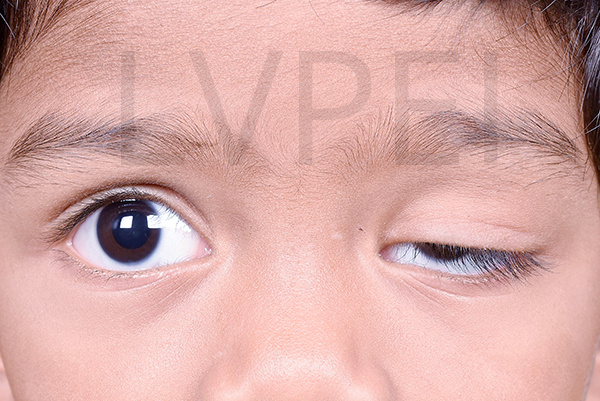
If the eyelid droop is severe and is hampering the vision development – surgery is needed to lift the eyelid as early as possible to promote vision development. Surgical options can be discussed with your eye doctor.
Myths:
- Exercise and medications do not improve this variety of ptosis.
Challenges:
- Once surgery is done:
The eyelids post-operatively are in correct position, but may not close completely while sleeping. Lubricating eyedrops, in the initial period, helps in adjusting to this new condition. Eventually, the child becomes comfortable and does not need the drops indefinitely.
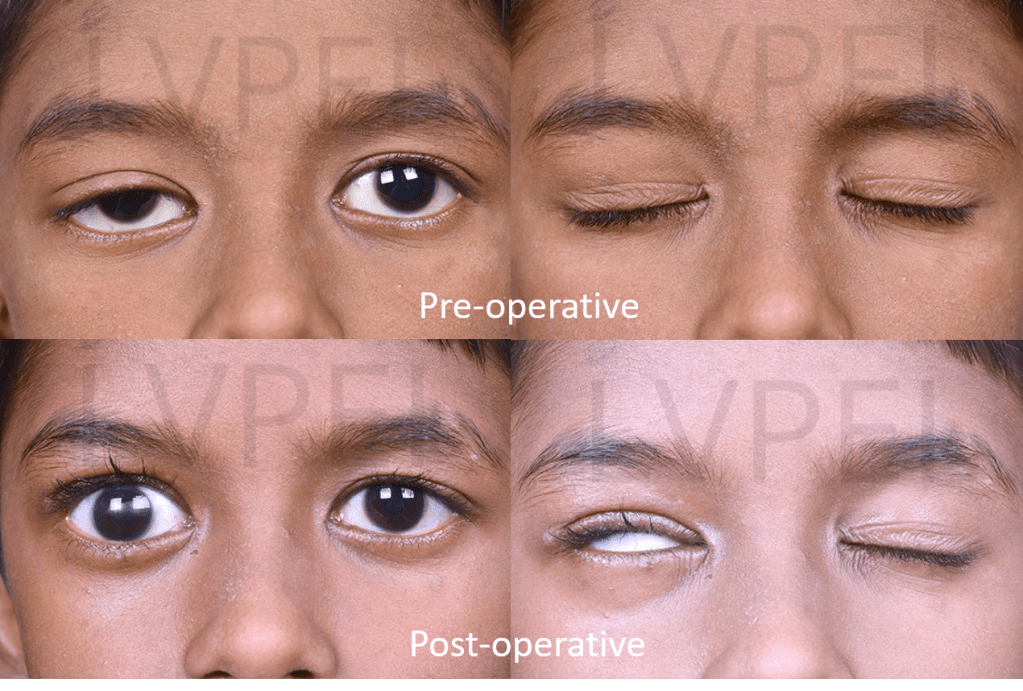
When the child looks straight, the eyelids appear corrected. But when the child looks down, the operated eye looks bigger than the normal eye.
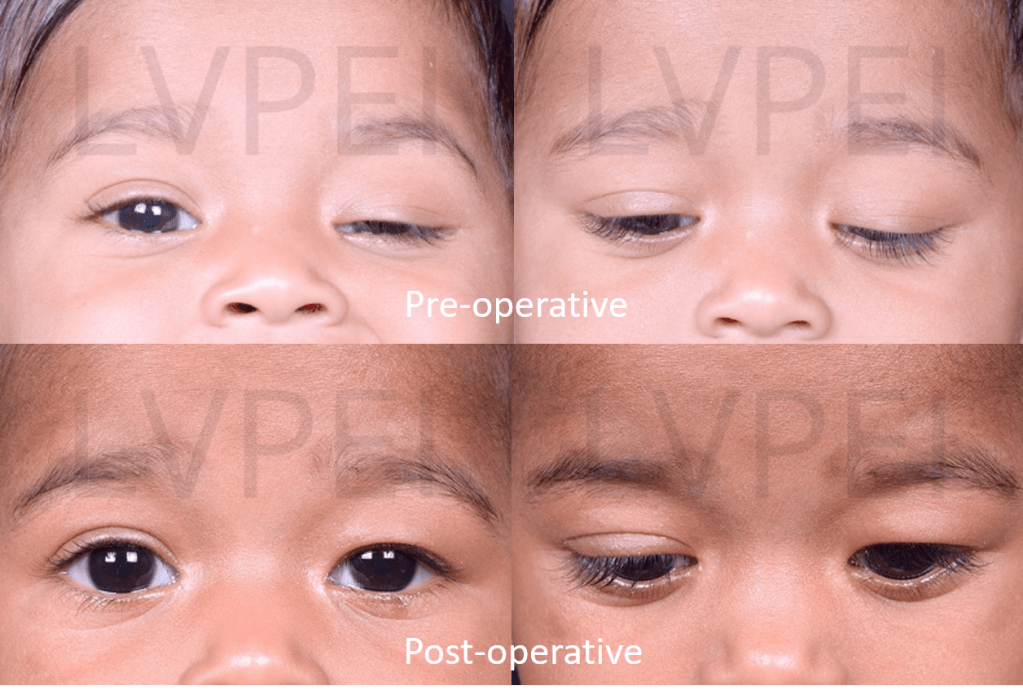
Why does this happen?
- We need to understand that the muscle in the eyelid is not normal. It is not functioning normally. When we operate, we are manually lifting the eyelid to bring it to normal position. We keep the eyelid ‘PULLED’ in the normal position. So naturally, when we look down or close our eyes, the eyelid tries to move down, but the surgery done pulls it up. Hence, the eye looks bigger when the child looks down and the eye does not close fully.
- However, we need not worry about the these two conditions as they do not cause any harm or affect the cosmesis. When the child is looking straight, the eyelids appear in normal position.
I shall be talking about droopy eyelid in adults in the next post. Till then stay home, stay safe.
Nandini Bothra
Consultant, Govindram Seksaria Institute of Dacryology,
Ophthalmic Plastic Surgery Services,
L V Prasad Eye Institute, Hyderabad.
Email id: nan_bothra@yahoo.com


Worth reading. A comprehensive explanation..
LikeLiked by 1 person
Very well explained. Thanks and keep up the good work
LikeLiked by 1 person
Keep writing on common problems to update us i.e Itching and irritation in the eyes
LikeLiked by 1 person
Well written
Comprehensive!
LikeLiked by 1 person
Lucid writing.
LikeLiked by 1 person